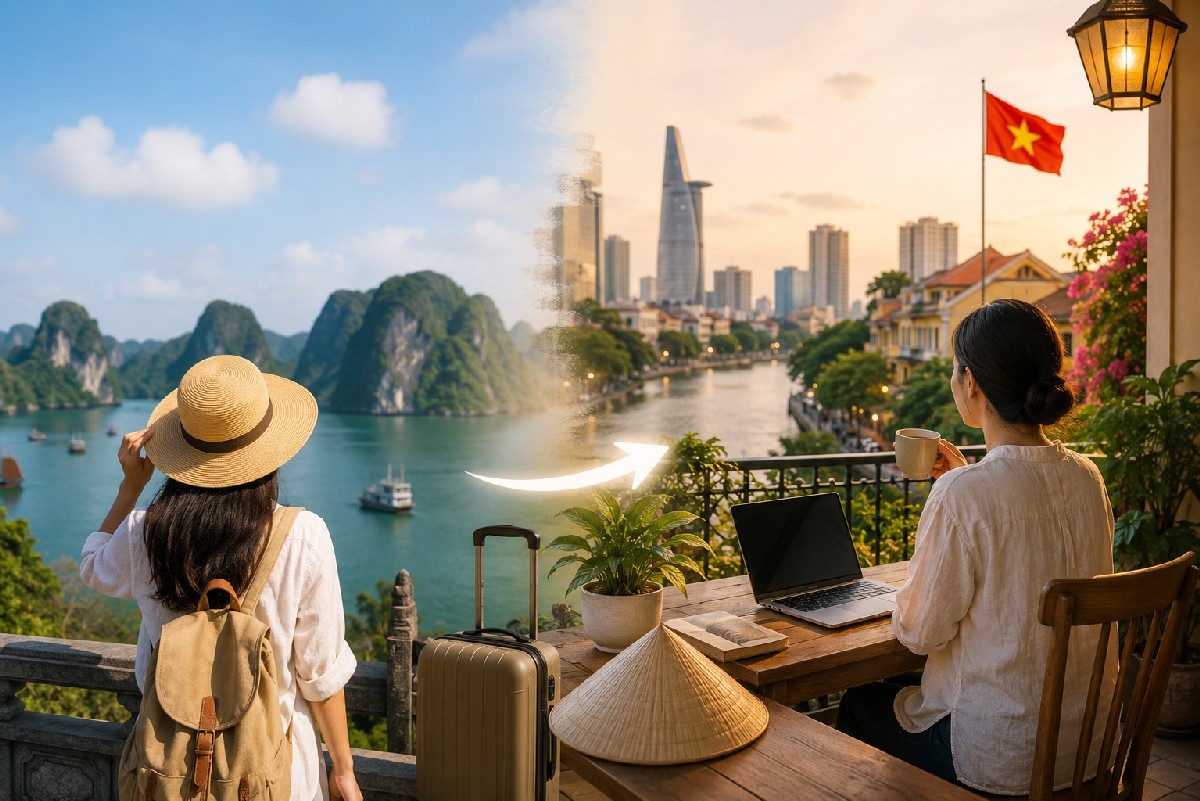
Вьетнам переживает беспрецедентный бум международного туризма.
После сильного восстановления после пандемии страна вернулась в центр внимания как одно из самых быстрорастущих туристических направлений в Азии. В 2024 году Вьетнам приветствовал более 17,5 миллионов иностранных посетителей, превысив годовой целевой показатель и приблизившись к своим предыдущим рекордам в сфере туризма. Импульс продолжился, поскольку страна позиционировала себя среди самых привлекательных направлений в Юго-Восточной Азии для путешественников со всего мира.
Но происходит кое-что интересное: многие посетители приезжают уже не только ради короткого отпуска.
Познакомившись с пейзажами, едой, городами и образом жизни Вьетнама, все большее число иностранцев начинают задавать другой вопрос:
Может ли Вьетнам стать местом для жизни, а не просто местом для посещения?
Переход от туризма к месту жительства становится все более распространенным. Международные профессионалы, предприниматели, инвесторы, цифровые работники и квалифицированные специалисты рассматривают Вьетнам как потенциальную долгосрочную базу.
Причины легко понять. Вьетнам предлагает сочетание экономического роста, конкурентоспособной стоимости жизни, модернизации инфраструктуры, молодого населения и расширения возможностей в таких секторах, как технологии, производство, образование, инженерия, финансы, логистика и гостиничный бизнес.
Однако переезд во Вьетнам – это не просто длительный отпуск.
В стране действует структурированная иммиграционная система, и для долгосрочного проживания обычно требуется четкая профессиональная, деловая или семейная причина. Хотя некоторые путешественники проводят во Вьетнаме более продолжительное время благодаря доступным вариантам туристической визы и короткому выезду из страны, это не является устойчивым решением для тех, кто хочет построить здесь постоянную жизнь.
Вьетнам все активнее ищет квалифицированных иностранных специалистов, которые могут внести свой вклад в его развитие. В зависимости от ситуации работодатели и органы власти могут потребовать признанную квалификацию, соответствующий профессиональный опыт, документацию о приеме на работу и соблюдение местных правил.
Для многих новичков этот процесс может сильно отличаться от того, к чему они привыкли дома. Иммиграционные процедуры, поиск жилья, контракты, административные требования и культурная адаптация — все это требует подготовки.
Поэтому, прежде чем принимать решение о переезде, необходимо понять, как перейти от посетителя к резиденту.
Почему все больше иностранцев рассматривают Вьетнам как долгосрочное направление
Растущая привлекательность Вьетнама выходит за рамки туризма.
За последнее десятилетие страна быстро развивалась, став важным экономическим центром Юго-Восточной Азии. Международные компании расширяют свою деятельность, местные отрасли промышленности становятся все более глобальными, а такие города, как Хошимин, Ханой и Дананг, привлекают растущее международное сообщество.
Иностранных специалистов часто привлекают:
- Более низкая стоимость жизни по сравнению со многими западными странами.
- Динамичная бизнес-среда
- Растущие возможности в сфере технологий, производства, образования, финансов, инженерии и гостиничного бизнеса.
- Современная инфраструктура в крупных городах
- Сильная гастрономическая и культурная сцена
- Стратегическое место для путешествий по Азии
Вьетнам также становится все более привлекательным для предпринимателей, удаленных работников, инвесторов и специалистов, ищущих другой образ жизни.
Но хотя Вьетнам приветствует иностранных гостей, стать долгосрочным резидентом – это другой процесс.
Прибытие во Вьетнам: туристический этап
Для большинства иностранцев первым шагом является прибытие в качестве гостя.
В зависимости от гражданства и действующих правил путешественники могут въехать во Вьетнам по туристической визе и остаться там на ограниченный период времени. Некоторые люди предпочитают продлить свое пребывание с помощью доступных вариантов визы или коротких поездок за пределы страны.
Для человека, путешествующего на несколько месяцев, этого может быть достаточно.
Однако постоянно полагаться на туристический статус – это не то же самое, что строить жизнь во Вьетнаме.
Любой, кто планирует остаться на длительный срок, должен понимать доступные юридические пути и убедиться, что его ситуация соответствует вьетнамским иммиграционным требованиям.
Что вам нужно, чтобы остаться во Вьетнаме на длительный срок?
Вьетнам имеет структурированную иммиграционную систему, и долгосрочное проживание обычно связано с четкой целью.
Общие пути включают в себя:
Работа
Многие иностранцы остаются во Вьетнаме, потому что они получили профессиональную должность в местной компании или международной организации.
Во Вьетнаме растет спрос на квалифицированных специалистов, особенно в таких областях, как:
- Разработка технологий и программного обеспечения
- Проектирование и производство
- Образование и международные школы
- Финансы и управление бизнесом
- Логистика и цепочка поставок
- Менеджмент в сфере гостеприимства и туризма
Для многих профессиональных должностей работодателям может потребоваться поддержка процедур получения разрешения на работу и предоставление необходимой документации.
Бизнес и инвестиции
У предпринимателей и инвесторов могут быть разные варианты в зависимости от структуры их бизнеса и уровня участия.
Вьетнам продолжает привлекать иностранные инвестиции, но правильная настройка требует понимания местных правил, процедур лицензирования и административных требований.
Семейная резиденция
Некоторые иностранцы переезжают по семейным связям, браку или визам иждивенцев.
Процесс и требования варьируются в зависимости от каждой отдельной ситуации.
Почему переезд во Вьетнам может быть непростым
Реальность жизни во Вьетнаме сильно отличается от поездки на несколько недель.
Повседневная жизнь может быть захватывающей и полезной, но новичкам часто нужно время, чтобы приспособиться к различиям в:
- Стили общения
- Административные процедуры
- Жилищные стандарты
- Транспортные привычки
- Банковские и платежные системы
- Местная бизнес-культура
Сопутствующая документация также может сбить с толку людей, незнакомых с вьетнамскими процедурами.
В зависимости от ситуации документы могут нуждаться в переводе, заверении, легализации или проверке. Отсутствие документов или неправильная подготовка могут привести к задержкам.
По этой причине многие иностранцы, планирующие серьезный переезд, предпочитают получить поддержку от переезд во Вьетнам специалисты, которые понимают местные процессы и могут помочь сориентироваться в практических шагах.
Поиск дома во Вьетнаме
Жилье часто является одной из первых серьезных проблем после принятия решения остаться.
Рынок аренды жилья во Вьетнаме работает иначе, чем во многих западных странах. Несмотря на наличие онлайн-платформ, многие объекты недвижимости по-прежнему рекламируются через местные сети, агентов и группы сообщества.
Это может создать трудности для новичков:
- Фотографии не всегда могут отражать текущее состояние объекта.
- Квартиры могут быстро исчезнуть из-за высокого спроса
- Качество строительства значительно варьируется
- Условия аренды могут потребовать переговоров
- Некоторые районы лучше подходят для иностранцев, чем другие.
Крупные города предлагают очень разные условия жизни.
В Хошимине многие иностранцы выбирают такие районы, как Тао Дьен, Бинь Тхань или Район 7, из-за наличия международных школ, ресторанов и устоявшихся сообществ эмигрантов.
В Ханое такие районы, как Тай Хо, популярны среди жителей других стран, которые ищут более спокойный образ жизни, оставаясь при этом на связи с городом.
Дананг также становится все более популярным, особенно среди удаленных работников и людей, предпочитающих прибрежный образ жизни.
Выбор правильного места часто имеет решающее значение в опыте переезда.
Понимание реальности жизни эмигрантов
Вьетнам — гостеприимная страна, но адаптация требует времени.
Многие иностранцы изначально приезжают сюда, привлеченные едой, пейзажами и низкой стоимостью жизни. Со временем они обнаруживают, что построение комфортной жизни требует понимания местных привычек и ожиданий.
Трафик — одна из первых регулировок. Количество мотоциклов, различные схемы вождения и оживленные улицы поначалу могут показаться ошеломляющими.
Язык также может быть проблемой. В крупных городах многие молодые вьетнамцы говорят по-английски, но повседневные ситуации часто требуют терпения и гибкости.
Деловая культура также может отличаться от того, к чему привыкли международные сотрудники, с разными подходами к общению, иерархии и построению отношений.
Вьетнам подходит всем?
Вьетнам предлагает огромные возможности, но он не является автоматически идеальным местом для каждого иностранца.
В стране действуют избирательные иммиграционные правила, и обычно приоритет отдается людям, которые могут внести свой вклад посредством профессиональных навыков, инвестиций или других признанных категорий проживания.
Тем, кто подготовится должным образом, Вьетнам может предложить превосходное качество жизни, сильное чувство общности и возможность познакомиться с одной из самых динамичных стран Азии в захватывающий период роста.
Главное – понять, что переезд сюда – это не просто длительный отпуск, а настоящий проект переезда, требующий планирования.
Заключительные мысли
Путь от открытия Вьетнама в качестве путешественника к построению долгосрочной жизни здесь становится все более распространенным с каждым годом.
Быстрое развитие страны, международные возможности и уникальный образ жизни продолжают привлекать людей со всего мира.
Однако успешный переезд зависит от подготовки. Понимание иммиграционных требований, выбор подходящего города, поиск подходящего жилья и адаптация к местной жизни являются важными шагами.
Вьетнам вознаграждает тех, кто находит время, чтобы понять его — не только как место для посещения, но и как место, которое можно назвать домом.